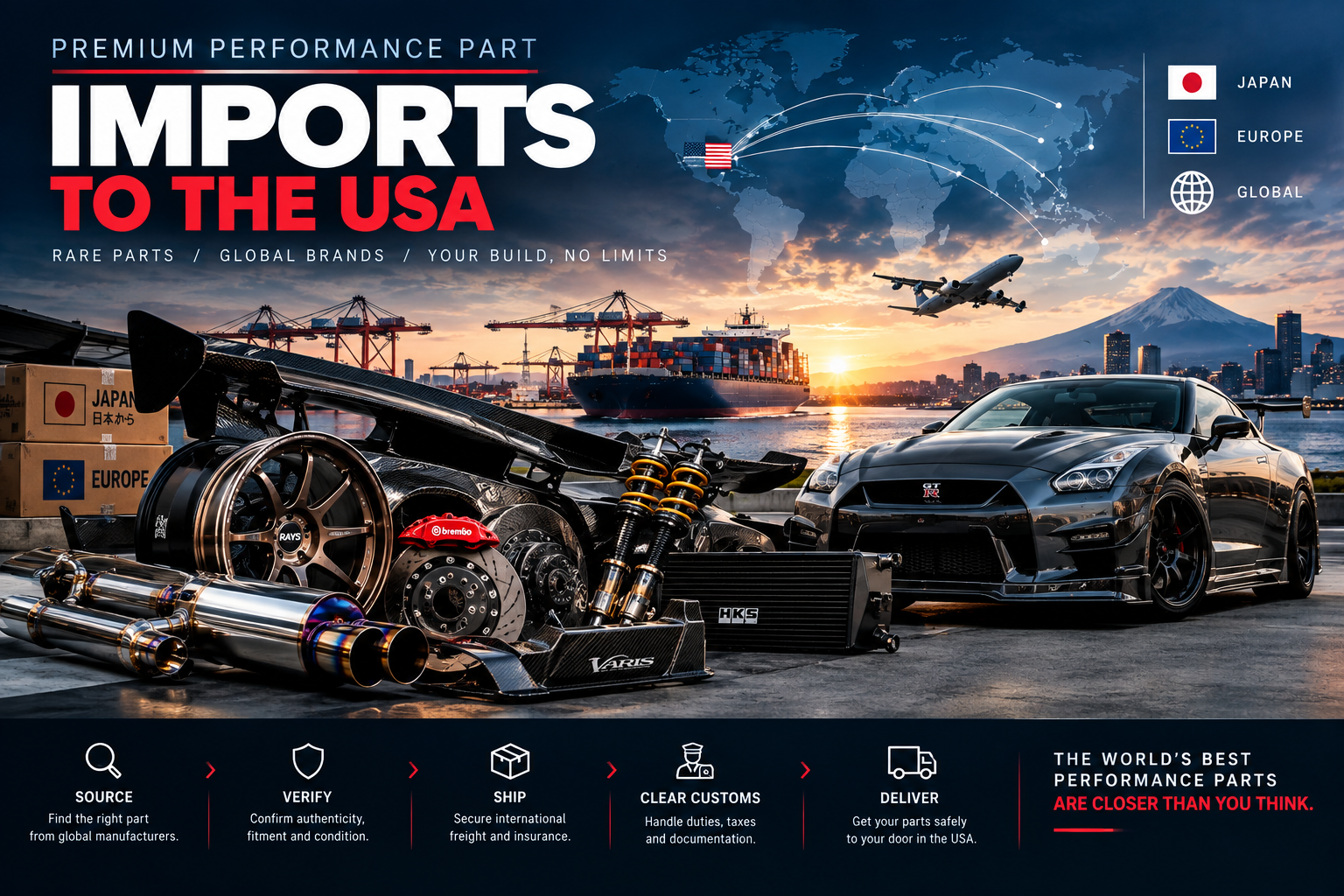
For enthusiasts building something truly special, the best performance parts aren’t always found at your local parts supplier.
Some of the most sought-after automotive components come from Japan, Europe, and other international markets. From limited-production aero and carbon-fiber components to high-end exhaust systems, suspension, wheels, engine upgrades, and motorsport-inspired parts, international manufacturers offer products that can transform a build from ordinary to exceptional.
The challenge is getting those parts from overseas to your garage in the USA.
That’s where premium performance part importing comes in.
Access to Parts You Can’t Easily Find in the USA
One of the biggest advantages of importing is access.
Japan and Europe have deep automotive cultures with manufacturers and tuning companies that have been producing specialized performance equipment for decades. Many of these companies cater to their domestic markets and may have limited distribution in the United States—or no U.S. distribution at all.
For the right vehicle, importing can provide access to:
- Limited-production body kits and aero
- Carbon-fiber components
- Japanese and European exhaust systems
- High-performance suspension
- Forged and specialty wheels
- Engine and drivetrain components
- Interior and OEM+ upgrades
- Motorsport-derived equipment
- Rare or discontinued parts
- Specialty components unavailable through U.S. retailers
For enthusiasts who don’t want their build to look like every other car at a meet, that access can be invaluable.
Why Premium Parts Require Premium Sourcing
When you’re spending thousands of dollars on a performance component, simply finding the cheapest listing isn’t necessarily the best strategy.
Authenticity, condition, fitment, manufacturer support, packaging, and shipping all matter.
This becomes particularly important with expensive carbon-fiber parts, rare body kits, forged wheels, and other components that can be difficult or expensive to replace.
A professional sourcing process should begin with identifying exactly what the customer needs and confirming that the product is correct for the vehicle.
From there, the process can involve locating the part, verifying its availability and specifications, coordinating the purchase, preparing it for export, arranging international transportation, and managing the shipment through to delivery in the United States.
The goal isn’t just to buy a part overseas.
The goal is to successfully get the right part into your hands.
Japan, Europe and Beyond
Different regions have their own performance specialties and automotive cultures.
Japan
Japan is particularly well known for its JDM performance ecosystem. From legendary tuning houses to smaller specialty manufacturers, Japanese companies produce everything from aggressive aero packages to highly engineered engine and chassis components.
For owners of Japanese performance vehicles, importing directly from Japan can provide access to parts designed specifically around the original vehicle platform.
Europe
European manufacturers and tuning companies offer an equally impressive range of high-end performance products.
Germany, Italy, the United Kingdom, and other European markets are home to manufacturers specializing in everything from lightweight carbon-fiber components and exhaust systems to suspension, braking, engine, and aerodynamic technology.
For European exotics and performance cars, international sourcing can open the door to products that aren’t commonly stocked in the American market.
Other International Markets
The global performance aftermarket extends well beyond Japan and Europe.
As automotive enthusiasts become increasingly connected through international communities and specialty manufacturers, unique products can come from virtually anywhere.
The key is knowing where to look—and knowing who you’re dealing with.
Understanding the True Cost of an Imported Part
One of the most common mistakes when purchasing internationally is looking only at the advertised price.
The actual cost of an imported performance part can include several components:
Part Price + Local Shipping + Export Handling + International Freight + Insurance + Customs/Duties + Brokerage + U.S. Delivery
The final amount is often referred to as the landed cost.
Understanding landed cost before purchasing allows you to make an informed decision and compare an imported part fairly against domestic alternatives.
In some cases, an imported component may initially appear more expensive but provide access to a product that simply isn’t available domestically. In other cases, international sourcing may be surprisingly competitive.
Either way, knowing the complete cost upfront is important.
Shipping High-End Automotive Parts
Shipping a premium performance part isn’t the same as ordering a small package online.
Large body kits, spoilers, bumpers, hoods, wheels, and other oversized components require specialized packaging and transportation planning.
Fragile materials such as carbon fiber and composite body panels deserve particular attention. Improper packaging can result in damage during handling, transportation, or loading and unloading.
Depending on the size and value of the shipment, transportation may involve air freight, ocean freight, or specialized cargo services.
The right shipping method depends on the part, urgency, dimensions, value, and destination.
When you’re dealing with an expensive component, the cheapest shipping option isn’t always the best option.
Fitment Is Everything
Premium doesn’t automatically mean compatible.
Before importing a part, fitment should be carefully confirmed.
Vehicle differences can exist between markets, model years, trims, special editions, and even different chassis configurations. A part designed for a Japanese-market vehicle may not necessarily be a direct installation on its U.S.-market counterpart.
Body kits can be particularly complicated.
A bumper or aero package may require specific brackets, lighting components, grilles, hardware, or additional modifications. Some products may also require professional preparation and installation.
Confirming these details before the order is placed can save significant time and money.
Authenticity Matters
The international automotive aftermarket includes genuine manufacturer products, authorized products, used components, replicas, and counterfeit goods.
Those distinctions matter.
A genuine premium component may feature specific materials, construction techniques, engineering, hardware, and quality-control standards that aren’t replicated by lower-quality alternatives.
When customers are investing in a high-end build, authenticity should be part of the sourcing process.
Knowing the manufacturer, supplier, product specifications, and origin of the component helps protect the investment and ensures that the part matches expectations.
Why Use an Experienced Import Partner?
Importing a performance part yourself is possible.
But as the value and complexity of the purchase increases, so does the potential for problems.
An experienced import partner can help coordinate the many moving parts involved in an international purchase.
That can include:
Sourcing
Finding the correct part and confirming availability.
Verification
Confirming manufacturer, specifications, condition, and fitment.
Purchase
Coordinating the transaction with the international supplier.
Export
Preparing the product and documentation for international transportation.
Freight
Selecting an appropriate shipping method based on size, value, and urgency.
Customs
Coordinating the import process and associated requirements.
Delivery
Getting the part safely from the port or freight facility to its final U.S. destination.
Having one experienced party coordinate these steps can simplify the process considerably.
Building Something Different
Today’s automotive aftermarket gives enthusiasts more choices than ever before.
But for owners building high-end exotics, JDM legends, European performance cars, track-focused machines, or unique street builds, the most interesting parts aren’t always sitting on a shelf in the United States.
International sourcing can provide access to products that make a vehicle genuinely different.
Whether you’re looking for a rare Japanese aero package, a European carbon-fiber component, a limited-production exhaust, or a performance upgrade that isn’t distributed domestically, importing can turn a difficult-to-find part into a realistic option.
The Bottom Line
Premium performance part importing is about more than moving a box from one country to another.
It’s about access, expertise, sourcing, logistics, and protecting your investment.
When the right part comes from the other side of the world, having an experienced partner manage the process can make all the difference.
For serious automotive enthusiasts, the world of performance parts doesn’t end at the U.S. border.
If the part exists, the right sourcing and import strategy can help bring it to your build.